
Companion Care vs. Personal Care: What's the Difference?
These two terms are often used interchangeably, but they describe different levels of support. Here's how to know which one fits your family's needs.
Our Services
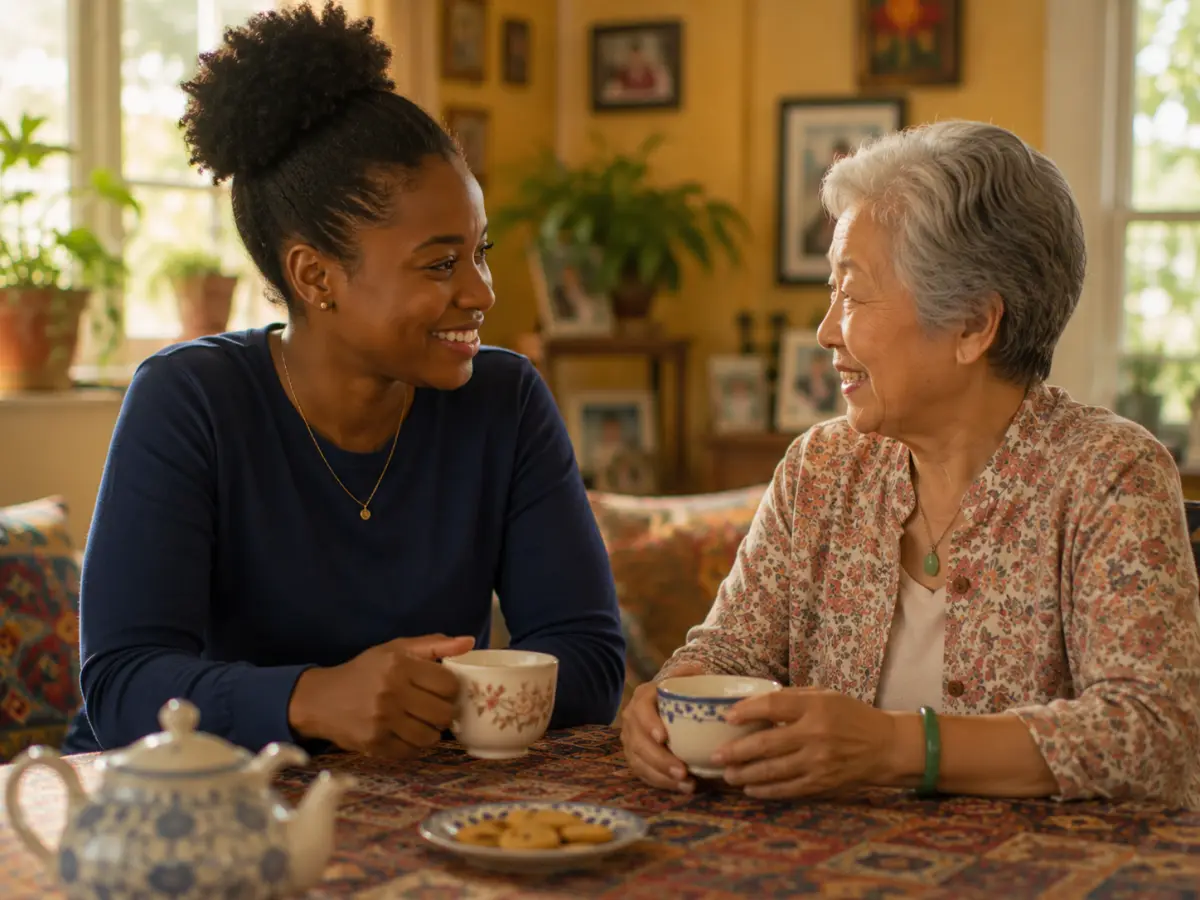
Friendly company and genuine connection: conversation, shared activities, and a caring presence that brightens each day.
Isolation is one of the most overlooked risks to a senior's health and happiness. Companionship care addresses this directly — our caregivers provide genuine company, conversation, and shared activities that bring connection and joy back into daily life.
This can include conversation and reminiscing, playing games or cards, reading together, accompanying clients on walks or outings, helping with hobbies, and simply being present. Companionship care is flexible and built around what brings your loved one comfort and pleasure.
Companionship is ideal for seniors living alone, those whose family lives far away, or anyone who would benefit from regular, friendly social interaction. It's also a gentle entry point for families just starting to explore in-home care — low-pressure, relationship-first support that often grows into deeper care over time.
We match caregivers to clients thoughtfully, considering personality, interests, and communication style. A good companionship match feels less like a service and more like a friendship — someone who shows up consistently, remembers what matters to your loved one, and genuinely looks forward to the visit.
Ready to learn more about Companionship?
Schedule a free consultation to discuss your loved one’s needs.
These two terms are often used interchangeably, but they describe different levels of support. Here's how to know which one fits your family's needs.
Wondering if your loved one needs extra help at home? These common signs can help you recognize when it's time to consider in-home care.